Multi-Tenant Compliance & Training Platform
Technology used: .NET/C#, Azure Cloud Services, GraphQL, Event Grid, Angular, MongoDB
Category: Innovation & Visual Integration
Role: Solution Architect
Period: 2023–2024
Project Type: Full-time engagement
A training organization needed a scalable platform to manage employee certifications across multiple clients. The system required handling complex certification matrices, supporting mobile-first workflows, and enabling distributed management where consultants could oversee multiple client accounts.
Other Skills: Solution Architecture, Team Leadership, API Design, Event-Driven Architecture, Infrastructure as Code, Stakeholder Management
Solution Architecture
The system was designed to scale to at least 50k weekly active users with hundreds of certification requirements per employee. Key architectural decisions included:
- Event-driven microservices on a mix of Azure Functions and Web Apps orchestrated using Event Grid, Azure Service Bus, and direct API access
- Multi-tenant design allowing consultant-managed client accounts with role-based access
- Mobile application for employee self-service management
- API-first architecture enabling parallel development of backend, web, and mobile components
- Scalable data layer using MongoDB and SQL Server with CQRS and GraphQL API (HotChocolate + Entity Framework)
More on the CQRS – GraphQL Applying CQRS in Practice: Lessons from a Recent Project - Security-first design with B2C/Entra External ID and multiple authentication layers
- Infrastructure as Code for consistent deployments and operational handover
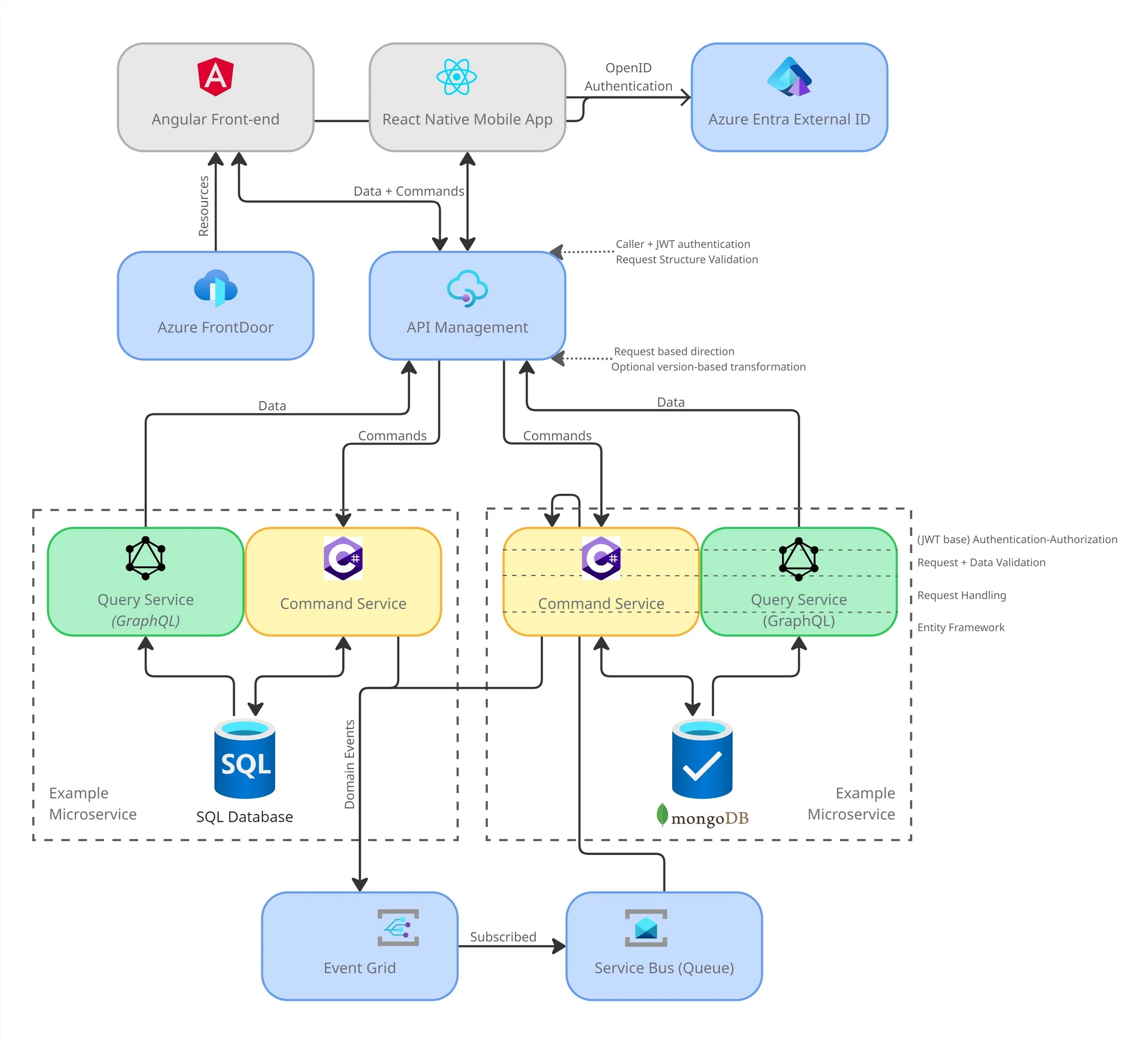
Simplified architecture diagram showing two example microservices. The complete system included multiple microservices following the same CQRS pattern with event-driven communication. A common structure was used as the baseline, and for each specific service I defined optional components (such as use of Service Bus vs direct event delivery, or hosting as Azure Functions vs .NET services).
Team Collaboration & Knowledge Transfer
Built and led a 12-person development team, focusing on enabling long-term sustainability through trust-based collaboration:
- API-first architecture enabling true parallel development – worked with an experienced frontend developer (previous collaborator) who owned the entire frontend with minimal oversight while I focused on backend architecture
- Collaborative design approach – for several components partnered with a self-described "junior" backend developer in architectural decisions, where I provided guidance while incorporating fresh perspectives that enhanced the overall design
- Distributed ownership model – Product Owner handled functionality and high-level UX flows, frontend lead managed the frontend team, while I ensured structural compliance and backend architecture
- Mentoring for succession – comprehensive documentation and knowledge transfer focused on team independence during development and post-handover
The collaborative design sessions proved particularly valuable – working with developers at different experience levels brought both seasoned expertise and innovative approaches to the architecture, reinforcing my belief that better solutions emerge through inclusive design processes regardless of formal experience levels.
Delivered Solution:
- Complete tenanted platform for employee and certification management
- Complex certification matrix system handling regulatory requirements
- Integrated web workflows and mobile app for certificate submission
- Comprehensive compliance reporting and audit capabilities
- System prepared for pilot deployments with multiple prospective clients
Technical Highlights:
- Event sourcing for comprehensive audit trails
- Multi-layered authentication and authorization
- Privacy-conscious design (though GDPR didn't apply due to Philippine hosting)
- Automated deployment pipelines